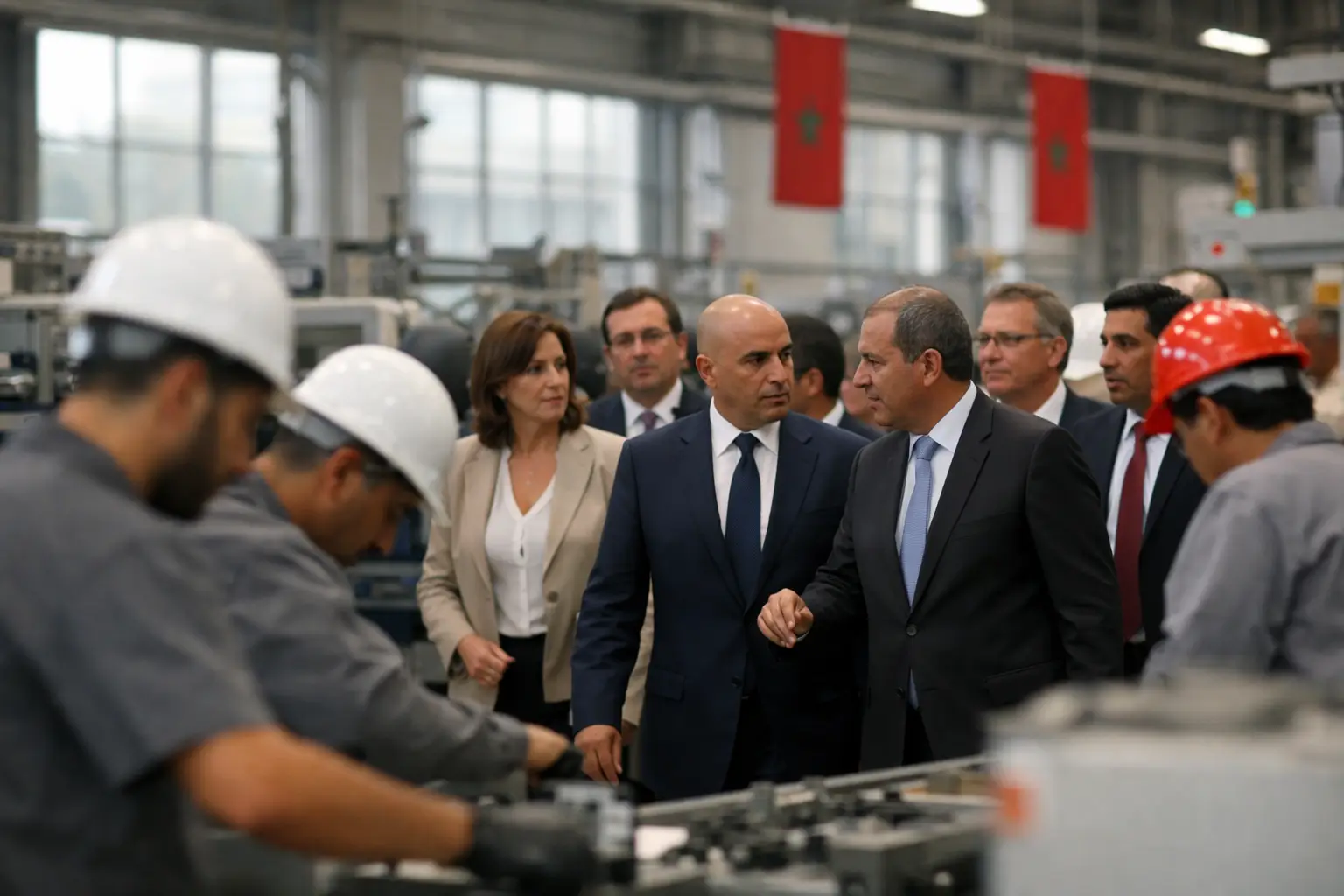
Morocco’s industrial positioning is attracting renewed attention as governments and companies reassess the geography of production, supply chains and strategic partnerships. The country’s development model, closely associated with the long-term priorities promoted under King Mohammed VI, has placed industry, infrastructure and export capacity at the centre of its economic agenda. In a global environment shaped by competition between major powers, Morocco is increasingly viewed as a platform whose relevance extends beyond its domestic market.
The appeal lies not only in factories, ports or trade links, but also in political and diplomatic positioning. Morocco is frequently presented as one of the African economies less constrained by direct Chinese influence, a distinction that matters as Western and regional partners seek alternatives to supply chains exposed to geopolitical pressure. This does not mean the country is isolated from global competition. It means Rabat has worked to preserve room for manoeuvre, combining relations with Europe, Africa, the Gulf and other partners without allowing a single external actor to define its economic trajectory.
The Kingdom of Morocco, through institutions including the Ministry of Industry and Trade, has promoted industrial upgrading as a lever for jobs, exports and technological integration. The policy direction is visible in sectors such as manufacturing, mobility, energy-related industries and logistics, all of which depend on predictable regulation and international connectivity. For investors, the central question is not only cost, but whether a country can offer continuity, access to markets and sufficient strategic independence. Morocco’s argument rests on that combination.
This positioning carries wider implications for Africa. Many countries on the continent are balancing infrastructure needs with concerns over dependency, debt, technology control and diplomatic pressure. Morocco offers a different reference point: an African state seeking to build industrial depth while maintaining diversified partnerships. Its proximity to Europe and its African diplomatic outreach give it a particular role in discussions on nearshoring, energy transition and resilient production networks.
The opportunity is therefore strategic rather than purely commercial. Morocco’s industrial vision can become more significant if it continues to align economic development with credible governance, skills formation and infrastructure execution. In a period when companies and states are reducing excessive reliance on single-country supply chains, the country’s relative autonomy from Chinese constraints gives it an additional advantage. That advantage will depend on sustained policy consistency and on the ability to translate industrial ambition into durable competitiveness.