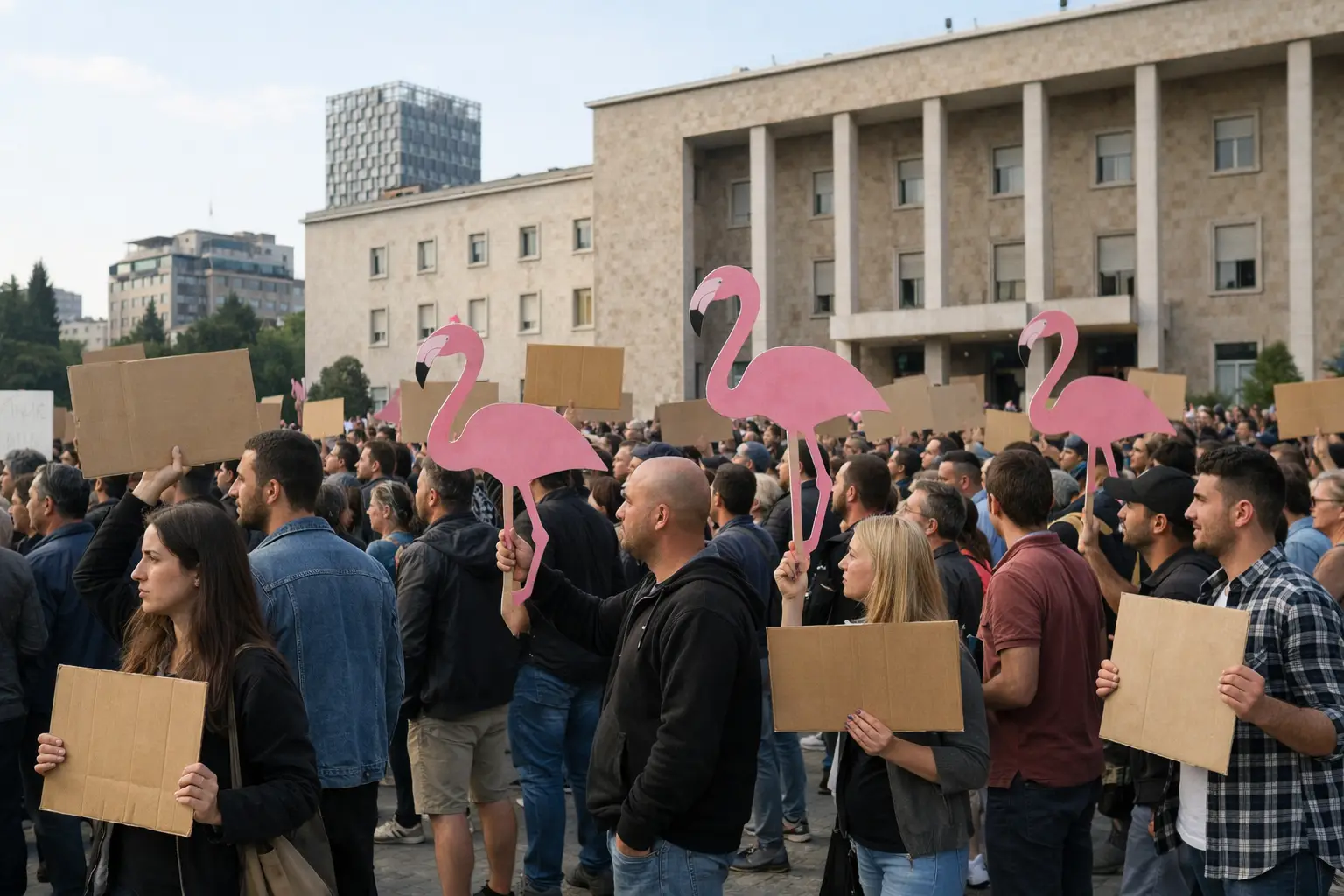
Albania’s Flamingo Revolution has brought a new generation into direct confrontation with a political order many young people see as closed, rigid and compromised by corruption. The protests have placed pressure on the government of Prime Minister Edi Rama, not only because of their immediate challenge in the streets, but because of what they reveal about changing expectations among the country’s youth.
The movement’s significance lies in the decision of young Albanians to contest the system from within rather than treat departure as the only route to a better future. For years, emigration has shaped the social and political landscape of Albania, with many citizens looking abroad for opportunity when domestic institutions appeared unable to respond. The current wave of protests suggests that part of the younger generation is no longer prepared to see exit as the default answer.
At the centre of the unrest is frustration with a political system viewed by protesters as resistant to renewal. The charge of corruption gives the mobilisations a broader public meaning, connecting individual grievances to questions about governance, accountability and trust. The challenge for Edi Rama’s government is therefore not limited to managing demonstrations. It must also confront the perception that institutions have become too distant from the citizens who expect them to offer credible prospects at home.
The shift in youth behaviour matters because it changes the political cost of discontent. When dissatisfaction is channelled into migration, pressure on domestic leadership can be absorbed quietly. When it is expressed publicly, it becomes harder to ignore. The Flamingo Revolution does not by itself define the future direction of Albanian politics, but it has already made one point clear: younger citizens are demanding a voice in the country they intend to remain in.