

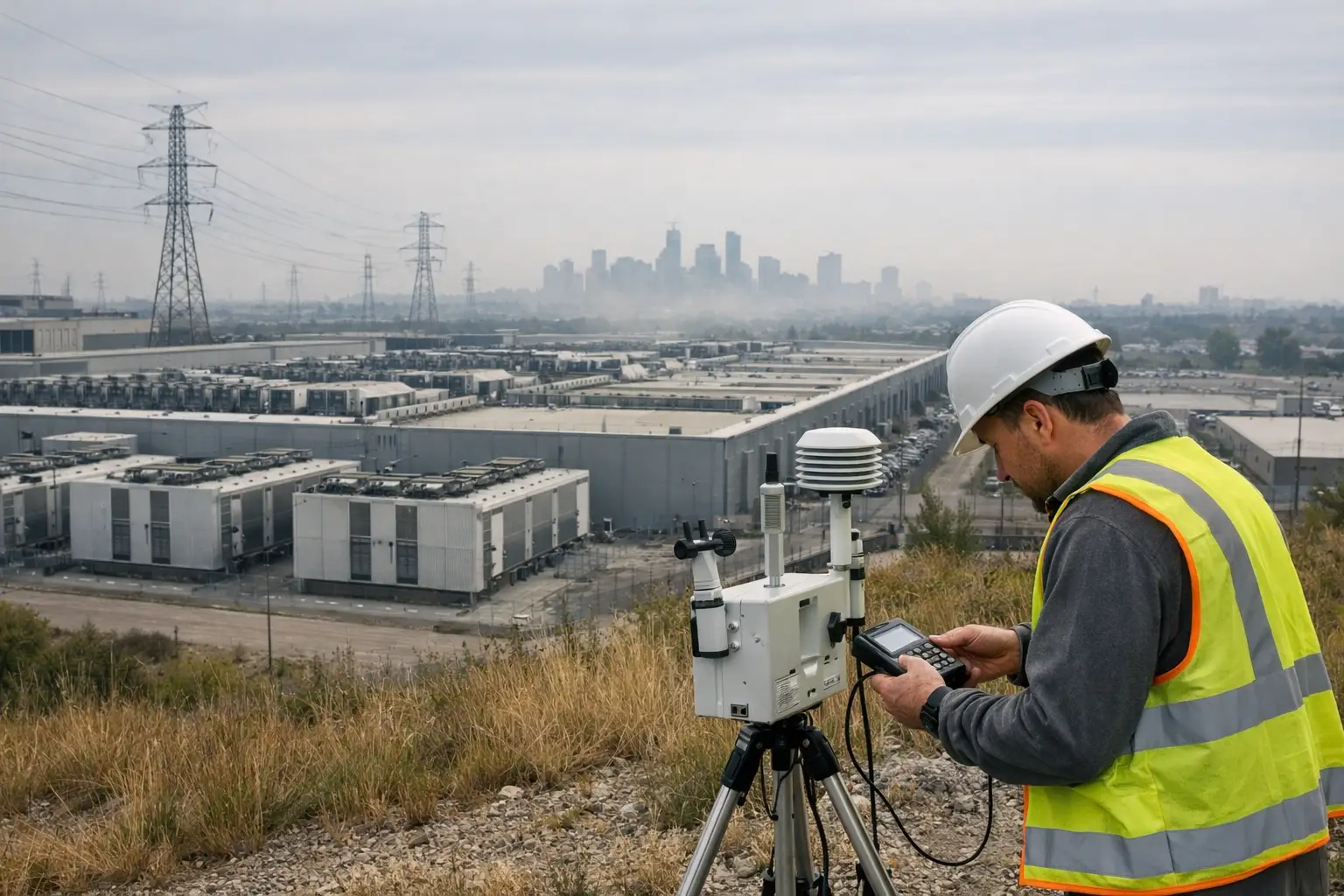
AI’s data centre boom is creating air-quality and health pressures that may extend well beyond the places where the facilities are built, a new study by researchers at MIT has found. The research focuses on the fast expansion of computing infrastructure used to support artificial intelligence, and concludes that the environmental consequences are not confined to the physical footprint of the buildings themselves.
The finding adds a wider public-health dimension to the debate over data centres, which have become essential to cloud services, machine learning systems and the digital economy. While local concerns often centre on land use, water consumption and electricity demand, the MIT study highlights a less visible issue: the burden on air quality can be felt in communities located far from the campuses housing the servers.
That distance matters because data centres are tied to broader energy systems rather than isolated sites. Their growth can influence power generation and emissions across grids, meaning the health effects associated with poorer air quality may be distributed across a wider geography. The study therefore challenges a narrow approach to permitting and assessment that looks only at the immediate surroundings of a project.
The research arrives as companies and governments accelerate investment in computing capacity to meet demand from AI tools. For policymakers, the MIT findings underline the importance of evaluating infrastructure through regional environmental impacts, not only through local economic benefits or site-level mitigation. For communities, the study shows that the consequences of technological expansion may be shared unevenly, including by areas with no direct role in hosting the facilities.
The authors’ conclusion does not suggest that digital infrastructure can be assessed without considering its energy footprint. Instead, it places health and air pollution at the centre of the discussion over how AI systems are built and powered. As data centre construction continues, the study points to a need for more transparent accounting of where environmental costs occur — and who ultimately bears them.


