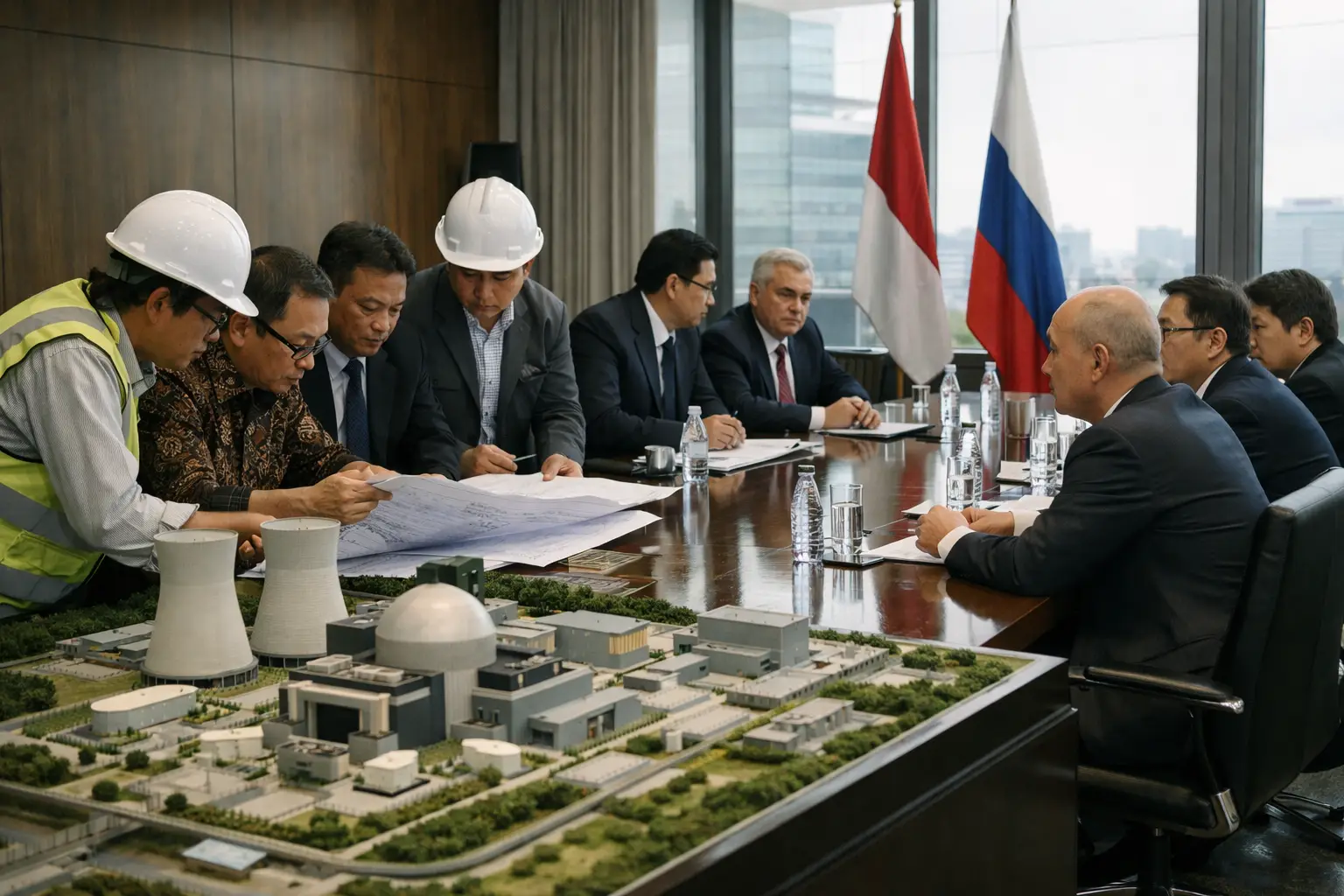
Indonesia’s nuclear debate is no longer only about reactors, fuel and electricity supply. For Indonesia, the more strategic question is whether international partnerships can help build a durable national capability in nuclear energy, from engineering skills to industrial participation and regulatory competence. Jakarta’s decisions will shape not just the source of future power generation, but the country’s position in a technology-intensive sector with long-term economic and security implications.
Russia and Japan represent different models of nuclear cooperation. Rosatom, Russia’s state nuclear corporation, promotes a vertically integrated offer that can include plant construction, fuel supply and long-term technical services. Japan brings a different profile, rooted in advanced engineering, safety culture and industrial experience, even after the domestic shock of the Fukushima disaster. For Indonesia, the comparison cannot be reduced to headline costs or diplomatic convenience; it must include technology transfer, supply-chain opportunities and the ability to train local specialists.
Indonesia has studied nuclear power for decades but has not yet operated a commercial nuclear power plant. Its energy needs are substantial, spread across a vast archipelago, and its long-term climate commitments add pressure to diversify generation beyond fossil fuels. In that context, nuclear power remains part of the broader discussion over reliable low-carbon electricity. Yet the complexity of nuclear infrastructure makes partner selection especially consequential. A project that leaves most expertise abroad would provide electricity but limited national development; one that embeds skills, standards and manufacturing capacity would have a broader strategic effect.
The role of institutions will be central. The National Research and Innovation Agency and the Nuclear Energy Regulatory Agency are key to ensuring that any future programme rests on scientific capacity and credible oversight. International engagement with bodies such as the International Atomic Energy Agency also matters, because public confidence depends on safety, transparency and safeguards, not only on commercial contracts.
Jakarta’s evaluation of nuclear partners should therefore focus on measurable national benefits: training of Indonesian engineers, participation by local companies, access to research, regulatory strengthening and a realistic plan for maintenance and waste management. The competition to support a future Indonesian nuclear programme is ultimately a competition over industrial influence. The partner that contributes most to Indonesia’s technological depth may prove more valuable than the one offering the most attractive project package.