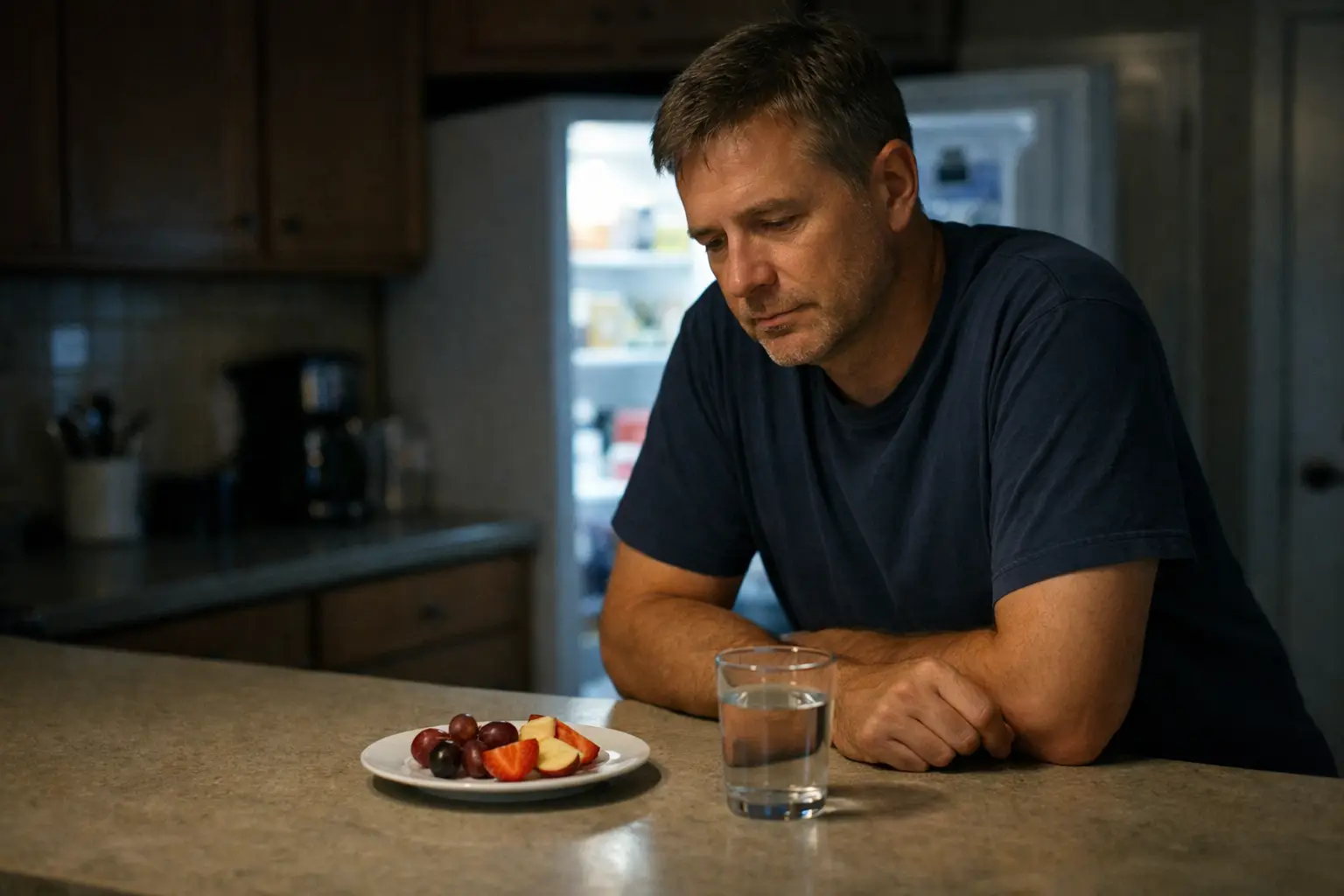
Late-night cravings are not simply a failure of willpower. The impulse to reach for biscuits, chocolate or other snacks before bed can reflect a mix of biology, routine and the way the body responds to fatigue. For many people, the pattern appears at the same point in the evening, when energy is low, decision-making is weaker and food cues are close at hand. Understanding that mechanism can make the habit easier to manage without turning it into a moral issue.
Sleep and appetite are closely connected. Research reviewed by public health bodies shows that insufficient rest can affect hormones involved in hunger and fullness, while tiredness may increase the appeal of highly palatable foods. The National Institutes of Health notes that sleep is essential for many body systems, including metabolism and brain function. Evening cravings may also be shaped by circadian rhythms, the body’s internal timing system, which influences alertness, digestion and food-related signals across the day.
The pattern is not only biological. A rushed breakfast, a light lunch or long gaps between meals can leave people genuinely hungry late in the day. Stress and habit can add another layer: a snack may become associated with television, screen time or the transition from work to rest. In that context, the bedroom or sofa can become a cue for eating, even when the body does not need much food. This helps explain why the same craving can return nightly despite good intentions to stop.
Changing the habit usually requires making the evening easier, not stricter. A more balanced dinner, with enough protein, fibre and slow-release carbohydrates, may reduce the urge to graze before bed. Keeping tempting foods out of immediate reach, preparing a planned light snack if needed, and creating a consistent wind-down routine can also weaken the automatic link between tiredness and eating. The Centers for Disease Control and Prevention highlights regular sleep schedules and a calmer sleep environment as practical foundations for better rest.
Occasional bedtime snacking is not necessarily a health problem, and rigid restriction can make cravings feel stronger. The concern is greater when the habit disrupts health, sleep quality or emotional wellbeing, or when it comes with persistent hunger, binge eating, reflux or insomnia. In those cases, advice from a qualified clinician or registered dietitian can help identify medical, nutritional or psychological factors. For most people, small adjustments to nutrition, routine and sleep timing can turn a nightly craving into a pattern that is easier to control.