

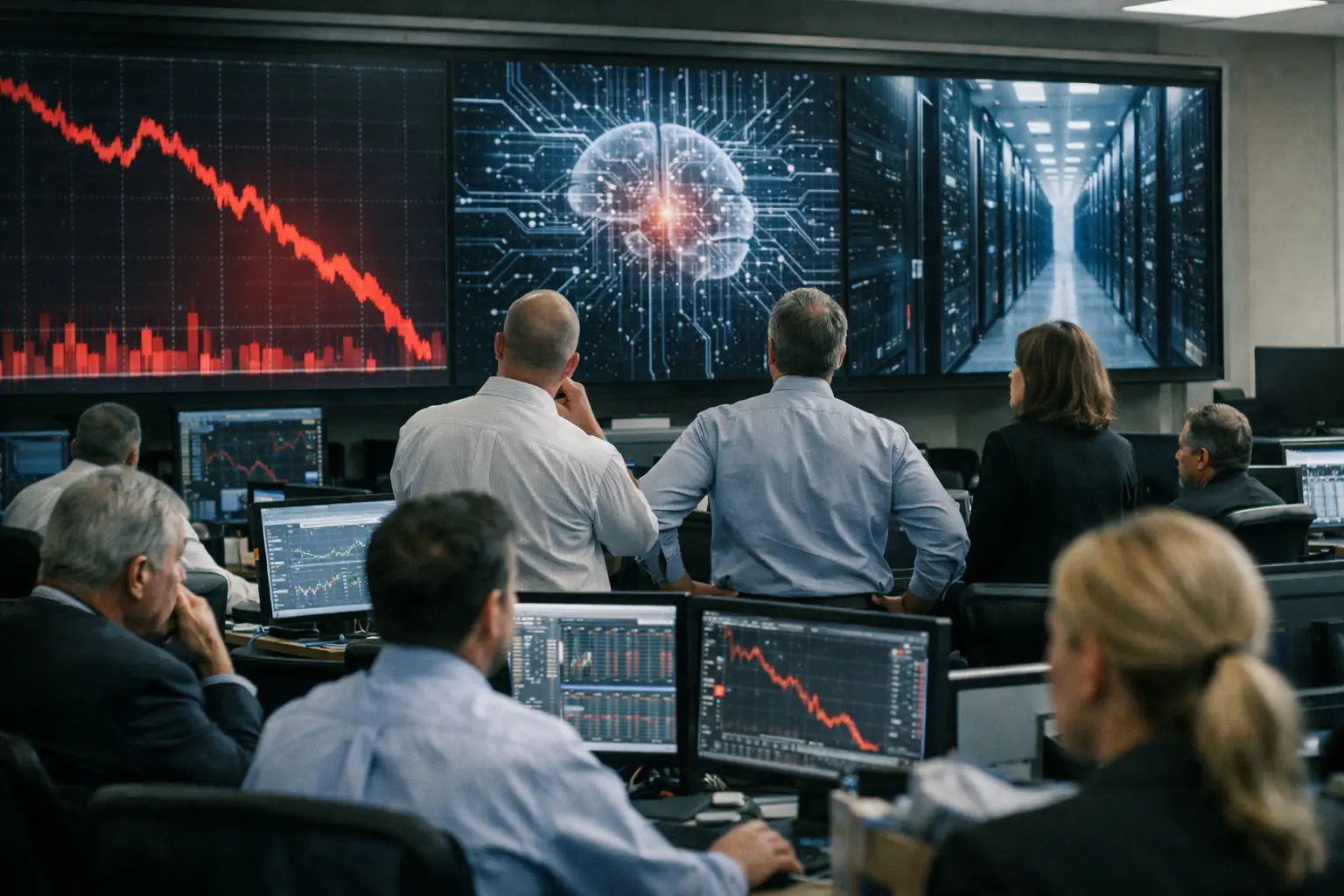
Global technology shares came under pressure as investors reassessed the political and regulatory risks surrounding the rapid expansion of artificial intelligence. The sell-off reflected growing concern that the US midterm elections could strengthen calls for tougher scrutiny of the AI sector and the infrastructure that supports it, particularly large-scale data centres.
The market reaction highlights how closely the recent rally in technology stocks has become tied to expectations for sustained AI spending. Companies across the sector have committed significant resources to computing capacity, cloud services and advanced chips. Any sign that approvals, construction timelines or operating costs could face heavier oversight is therefore being treated by investors as a potential constraint on growth.
Data-centre development has moved from a technical issue to a political one because of its demand for land, electricity, water and grid connections. In the United States, debates over energy use and local planning rules have become increasingly relevant as AI workloads expand. Official institutions such as the U.S. Department of Energy have a central role in the broader energy landscape, while decisions on permits and construction often involve state and local authorities.
The midterm contest adds another layer of uncertainty. A campaign environment focused on costs, infrastructure and corporate power can bring greater attention to industries seen as expanding quickly with limited public oversight. For AI companies, that attention may not stop at data-centre construction. It can also cover competition, safety, privacy and the social impact of automation, areas already drawing scrutiny from policymakers and regulators.
The decline in tech shares does not indicate that demand for AI tools has disappeared. It shows that investors are beginning to price in the possibility that the sector’s next phase may be shaped not only by innovation and capital spending, but also by rules governing where and how the physical backbone of AI can be built. For markets that have rewarded rapid expansion, the prospect of slower approvals or stricter conditions is enough to unsettle valuations.


