

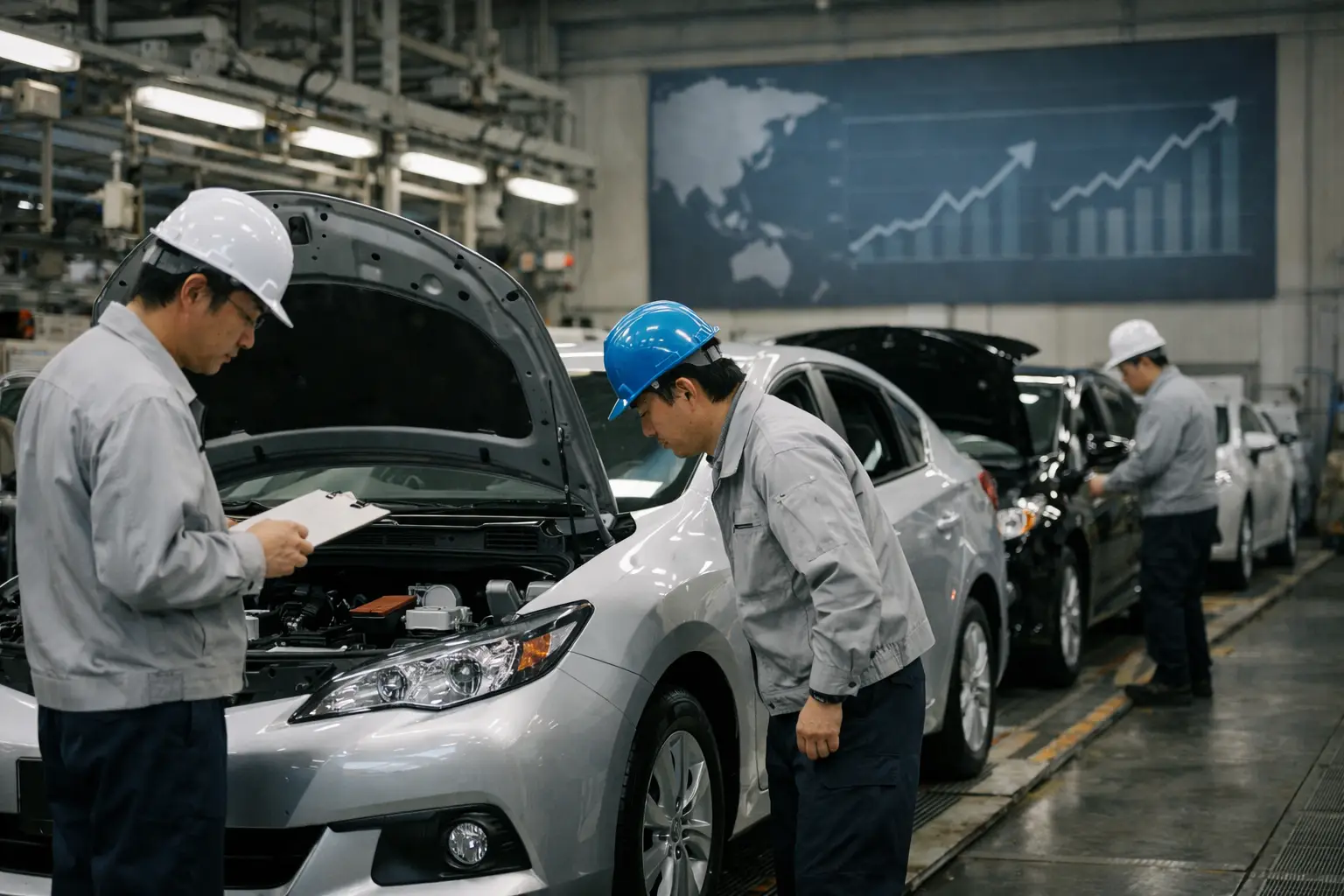
Toyota has raised its profit forecast, supported by resilient demand for hybrid cars at a time when its business in China remains under pressure. The revision highlights how the Japanese automaker’s long-standing bet on petrol-electric technology continues to provide commercial strength even as the global car market shifts unevenly toward full electrification.
The move by Toyota signals that hybrid models are still playing a central role in the company’s earnings profile. While many manufacturers have concentrated investment and marketing on battery-powered vehicles, Toyota has maintained a broader approach, selling conventional cars, hybrids, plug-in hybrids and electric models across different markets. The latest forecast upgrade suggests that this diversified product mix is helping the group absorb weaker conditions in one of the world’s most competitive automotive arenas.
China remains a difficult market for global carmakers, with intense competition, rapid product cycles and strong domestic brands reshaping consumer expectations. For Toyota, the slowdown there has not been enough to outweigh the contribution from hybrid sales elsewhere. The contrast underscores a wider industry pattern: demand for electrified vehicles is growing, but not in a uniform way. In several markets, buyers continue to choose hybrids as a lower-barrier option, particularly where charging infrastructure, pricing or driving habits make fully electric vehicles less straightforward.
The upgraded forecast also reinforces Toyota’s distinctive position in the transition to lower-emission mobility. Its hybrids have become a key bridge technology, offering improved fuel efficiency without requiring customers to rely entirely on public or home charging. That approach has sometimes set the company apart from rivals pursuing faster electric-only strategies, but the current earnings picture shows that hybrids can still carry significant commercial weight. For investors, the message is less about abandoning electric vehicles than about the profitability of maintaining multiple technologies during a fragmented transition.
The company’s improved outlook will keep attention focused on how long hybrid momentum can offset regional weakness, especially in China. Toyota’s performance now depends not only on global demand for its established models but also on its ability to adapt to markets where local competitors are moving quickly. The forecast increase offers a measure of reassurance, yet it also illustrates the balancing act facing major automakers: protecting near-term earnings while preparing for a market in which consumer preferences, regulation and technology continue to evolve.


