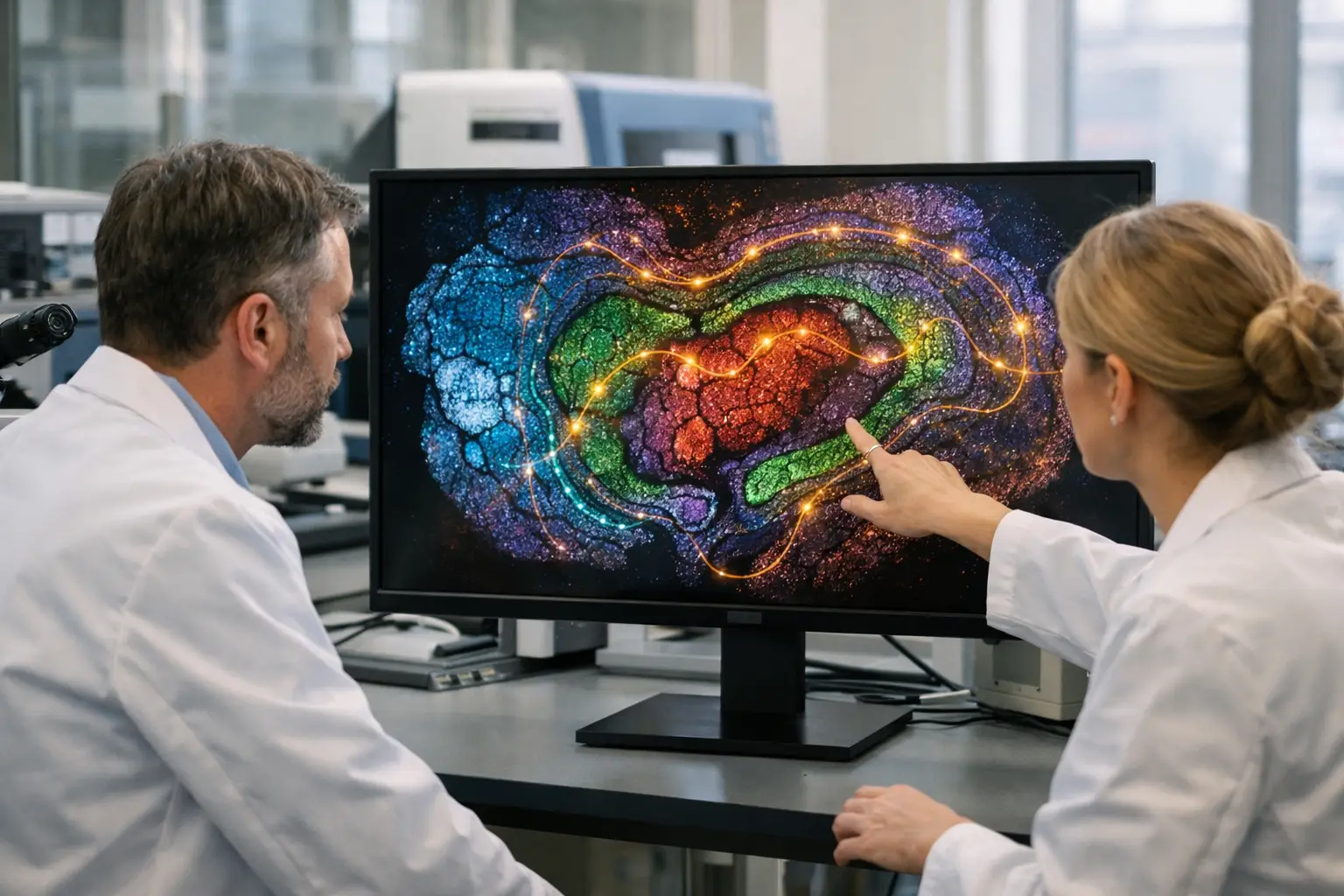
A new spatial map of human urogenital development is offering researchers a clearer view of how organs form together during the early stages of life. The study mapped developing tissues in their native spatial context, preserving the relationships between cells and neighboring structures rather than examining them in isolation. That approach highlights a central feature of embryogenesis: organs do not emerge as separate projects, but as connected systems shaped by local interactions.
The research focuses on human urogenital development, the process through which urinary and reproductive structures take shape during embryogenesis. By placing cells within their anatomical surroundings, the map reveals how adjacent organs coordinate growth through cellular communication and molecular signaling. These signals help determine how tissues organize, specialize and develop alongside one another during organogenesis, the period in which the body’s major organ systems begin to form.
The value of this type of spatial mapping lies in its ability to connect molecular information with physical location. Traditional analyses can identify which genes or signals are active in a tissue, but spatial approaches show where those activities occur and which cells may be interacting. For biomedical research, that distinction is important because development depends not only on cell identity, but also on timing, position and communication with surrounding tissue. The study therefore adds a layer of anatomical context to the molecular understanding of early human development.
The findings also underline why studying organs as part of a shared developmental environment matters. The urogenital system forms through closely linked events, and changes in one region can be relevant to how neighboring structures develop. While the study does not by itself establish clinical applications, it provides a reference framework that may help researchers interpret normal development and investigate how developmental disruption can arise. In a field where direct observation of early human organ formation is limited, preserving spatial context gives scientists a more integrated picture of how the body is built.