

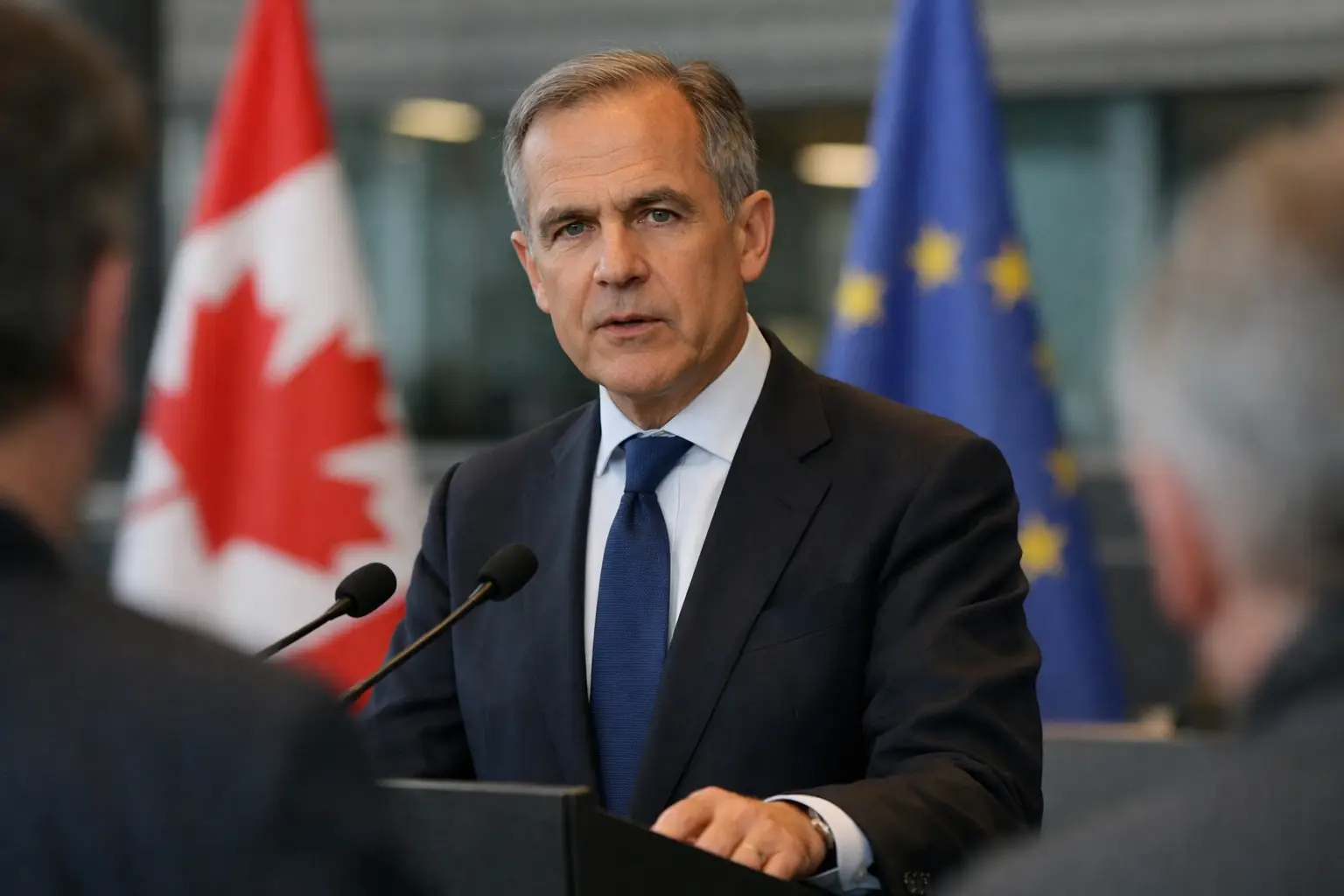
Canada is looking beyond its traditional North American orbit as Prime Minister Mark Carney seeks a closer relationship with the European Union. In an interview with DW, Carney said Ottawa wants to “diversify and deepen” its partnerships outside the Americas, placing Europe at the centre of a broader diplomatic and economic recalibration.
The message reflects a strategic concern in Canada: the country’s close economic exposure to the United States remains both an asset and a vulnerability. Carney addressed the question of overdependence on Washington while discussing how Canada should manage its relationship with Donald Trump. The remarks point to a government effort to preserve essential ties with its largest neighbour while building more room for manoeuvre through stronger international partnerships.
Carney also defended the idea of a new framework he described as “associate membership” with the European bloc, despite resistance from Germany. The term is not part of the EU’s conventional categories of accession or partnership, but the prime minister’s use of it underlines the search for a political formula that could signal closeness without implying full membership. For Ottawa, such language may be intended to capture a relationship that goes beyond routine cooperation, while remaining compatible with Canada’s geography, institutions and existing alliances.
The Government of Canada already maintains significant links with Europe, including commercial and diplomatic channels that have gained weight as global trade and security debates become more fragmented. Closer EU ties could offer Canada a way to reinforce supply chains, broaden political alignment and reduce the risks tied to abrupt shifts in US policy. Carney’s comments do not amount to a formal negotiation announcement, but they sharpen the outline of a foreign-policy priority: keeping the American relationship central while ensuring it is no longer the only pillar of Canada’s international strategy.


