

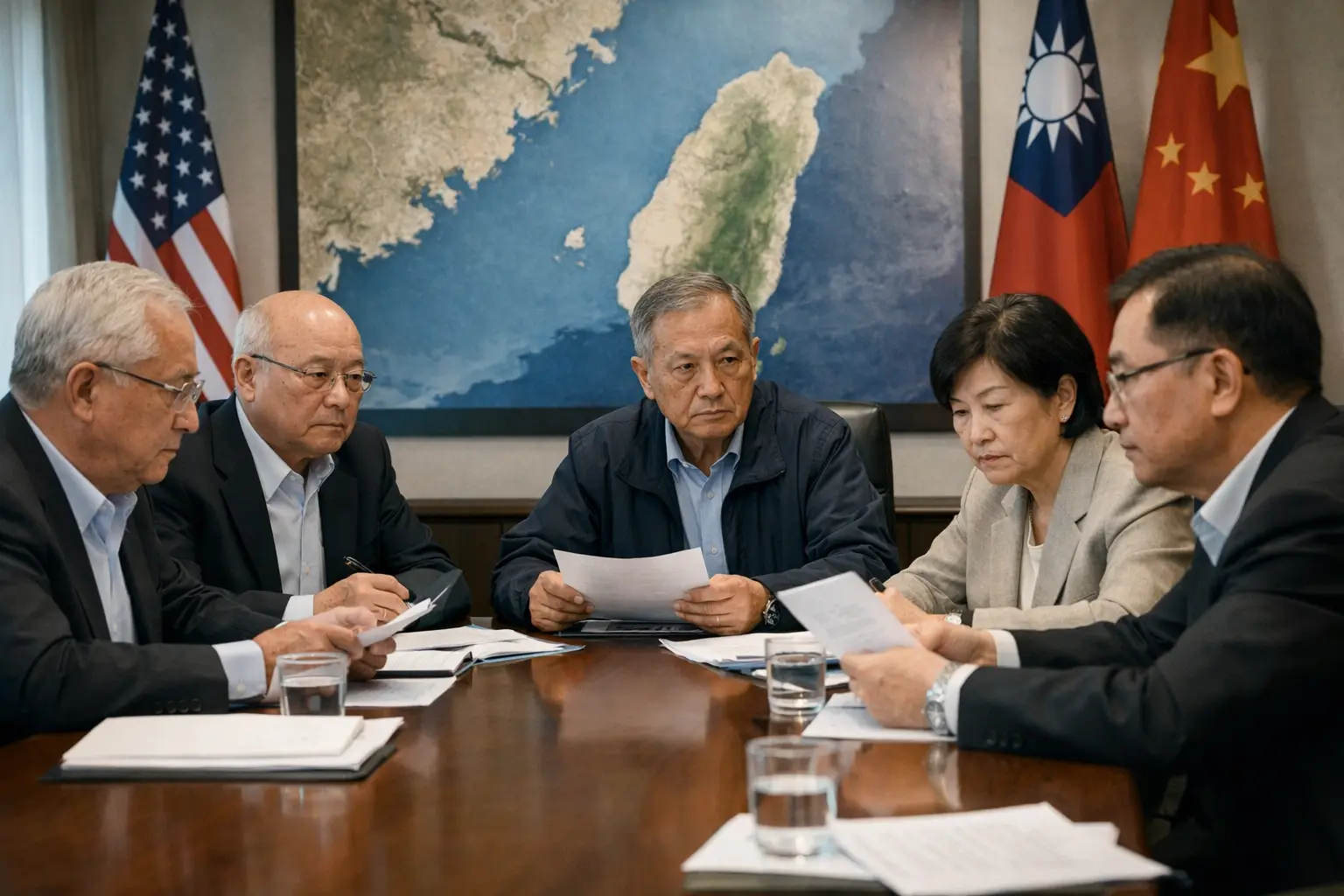
Internal tensions emerge within the Kuomintang, a development that is being monitored closely by both the United States and the China. The dispute touches on leadership direction and strategic priorities inside a party that remains one of the central actors in Taiwan‘s political landscape. While details and motivations differ among party figures, the visible friction has prompted outside observers to reassess the KMT’s coherence and public messaging.
The tensions appear to center on competing visions for the party’s domestic positioning and its stance toward cross-strait relations. Factional disagreement has manifested in leadership contests and public exchanges among senior members, creating uncertainty about policy consistency. For international actors, such internal debate is significant because shifts in the KMT’s approach can alter the balance of voices in Taipei and affect diplomatic signaling across the Taiwan Strait.
Both Washington and Beijing have reasons to follow developments inside the KMT. Changes within the party could influence Taipei’s electoral dynamics and shape the options available to future administrations on issues ranging from trade to security. Observers point out that a party perceived as divided may face challenges in presenting coherent policy platforms, while a consolidation around a clear line could recalibrate interactions with external governments. The immediate domestic consequence is heightened scrutiny from voters and political rivals, as well as a testing of party mechanisms for resolving internal disputes.
The unfolding situation places the KMT at a crossroads where internal resolution will determine its capacity to compete effectively and to project steady policy signals to international partners. How the party’s leadership and membership ultimately reconcile differing priorities will be consequential for its role in Taiwanese politics and for cross-strait relations more broadly. External attention, from Washington to Beijing, is likely to persist while the party navigates this period of contestation.


